
Why I hate the word sustainability


What happens when your intervention is over? When you stop training the doctors, providing the bags of food, or advising the Ministry of Finance? Will anything remain? If something will remain, your project is sustainable. That quality – being designed to continue once the outsider effort ends – is sustainability.

I hate this word because the grammar makes no sense.

I also hate this word because it means so many things to so many different people. The definition I just gave you was the one that I learned from a former boss, the smartest woman in the world. (Seriously, she is. If you had ever met her, you’d agree with me.) Sheila taught me that sustainability isn’t about your project continuing, or even the institution you support or develop. Sustainability is about the change you help bring about being a lasting change. It doesn’t matter if your child health center closes if children continue to get improved medical care.

Other people think other things. Some people think sustainability is about building organizations and institutions that last. A lot of projects think that sustainability is about having a steady supply of new donors; a project is sustainable if it will be able to find a new donor once you stop funding it. MSF, of course, thinks sustainability is irrelevant.

So, I guess I hate the word sustainability because it has no agreed upon-meaning, and it’s a prime example of the kind of jargon that keeps planners from thinking about the details of what they want to do.

Edited to add: Jeff Trexler reminds me that I left out an entire set of meanings for the word sustainable. One of its most common usages is as part of the phrase “sustainable development.” Sustainable development refers to development which occurs without damage to the environment, culturally appropriate, and continues on its own once begun (according some combination of the criteria I defined above).

Edited again: Owen Barder has his own take on what’s wrong with sustainability.
Innovation Part II

We need to get over our obsession with innovation. It’s hurting our ability to do good development work. We get caught up in trendy new ideas – we fondle the hammer – and we exhaust out energies looking for the next big thing instead of supporting interventions which have been proven to work.

Innovation is not a quick fix. It is not a magic bullet that will solve all our problems. Social media is a genuine innovation (as Our Man in Cameroon points out), but it has rules and best practices. It takes time and skill to learn to use it well. Antibiotics were an innovation in their time, but they too had to be perfected and properly used before they could save lives.

When I lived in Cairo, people on the street used to talk about Japanese engineers. Everyone was sure that the Japanese government was about to build a new sewer system, repave the roads, or extend the subway. I lived in Egypt ten years ago. Cairenes are still waiting for their Japanese metro.

Chasing innovation too often leads us astray, when we could be plugging along at the things that have been proven to work. Those things do exist. Girls’ education. Microfinance. Contraception. We need innovation; it’s true. But it’s not all we need.

Innovation

Let’s talk about innovation. Innovation ought to be a game-changer. It out to be the insight, the idea, the new way of doing things or the amazing new tech that inverts the way we approach a problem. Positive deviance was an innovation, and it leads to more innovation. Cell phones were an innovation. Vaccines were an innovation. Capitalism, way back way back when, was an innovation.

Doing the same thing in a slightly new way is not innovation. Nor is making up new words for existing techniques.

And it’s okay if you’re not innovative. Innovation is not the answer to all problems. Innovation, in fact, can go horribly wrong. (French revolution, anyone?) If you’re doing things that are not innovative, there are other words you get to use. Research-based. Proven. Evidence-based. Play to your strengths; don’t try to fake something else.

(topic suggested by James Bon Tempo)

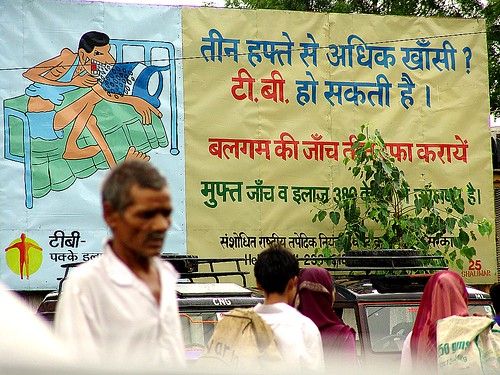
Briefing: Tuberculosis


I recommend that before you read this entry, you go here. Right click, open it in an another window. Then come back here, and read.

Tuberculosis (TB) is mostly an illness of the poor. It is caused by a bacterium called Mycobacterium tuberculosis. It’s hard to get tuberculosis if you have a fully functioning immune system and a nutritious diet. It’s easy to get tuberculosis if you are sick, hungry, or have HIV. People who have HIV in developing countries are very likely to also get TB. There are three kinds of tuberculosis. All are equally infectious, but some are much more fatal once you are infected.

1. Regular, which can be cured with a standard regimen of drugs, most often the regimen recommended by the “directly observed therapy short-course”, or DOTS. If your get proper treatment, it is pretty easy to survive regular tuberculosis. (And training doctors to use the DOTS drugs will ensure that the largest percentage of TB patients get better.) People in the developing world are often afraid to go for treatment, but tuberculosis can be cured, and treatment is free in many countries.

2. Multi-Drug Resistant Tuberculosis (MDR TB). This is a TB infection that cannot be cured with the usual drugs. Doctors must prescribe second-line drugs to cure this form of TB. There are two ways to get MDR TB. You can get regular TB, and be prescribed the wrong combination of drugs, or fail to take your drugs. This will mean that the weak bacteria in your body are killed by antibiotics, leaving the stronger ones to breed and take over. These survivor bacteria cannot be killed by the usual drugs. You may also get tuberculosis from someone who has gone through this process and has MDR TB; your bacteria will therefore be the stronger, survivor bacteria even at the beginning of the infection.

CDC MDR TB fact sheet

Wikipedia entry on MDR TB

3. Extremely Drug-Resistant Tuberculosis. (XDR TB) This is the worst kind of TB to be infected with. It cannot be treated with the normal, first-line drugs, or the less common drugs used for MDR TB. It requires rare, third-line drugs to cure it. These drugs are more expensive, harder to store, and may have severe side effects. 50-80% of XDR TB can be treated or cured.

Medical News Today on XDR TB

The WHO on XDR TB
The Stop TB alliance on XDR TB

For a long time, drug companies didn’t bother to research and develop new antibiotics. They were cheap and didn’t make a huge profit margin, and so effective that new ones were not really necessary. When drug-resistant TB first showed up, there were no second and third-line drugs. Doctors used veterinary drugs never used for people, and old-fashioned antibiotics that had been discontinued because of dangerous side-effects.

We can stop TB by improving the availability of good TB drugs, reducing the incidence of HIV/AIDS, or making poverty less common. Your money is well spent on any of those things.

This entry was inspired by James Nachtwey, and his TED Prize wish.

(Photo Credit: Saad Akhtar)

International development blogs

My Google alerts have been good to me. I have been heartened to discover more and more blogs which touch on international development in interesting ways. You may have seen my blog roll expanding; I’m trying to create something like a comprehensive list. Check it out and explore.

Here are a few highlights:

NGO blogs

Oxfam and Refugees International both have great organization blogs, which showcase deep topical knowledge and passionate writing. Medecins sans Frontieres has a whole compendium of personal accounts by aid workers. Project HOPE has a blog all about (and by) their field volunteers, which would be a great resource for someone who wanted the nitty-gritty about medical volunteering.

Individual blogs

Vasco Pyjama has amazing, amazing posts about life abroad doing international development work. She is the real thing; full of insight on the work she does and with a wry and engaging voice. Chris Blattman is a famous development economist (insofar as there is such a thing) and one of my personal heroes. The Road to the Horizon, by Peter Casier, is dense with interesting information, personal observations, and lovely storytelling.

Jargon of the day: FSN

Jargon: FSN

Translation: This is a US embassy acronym that stands for “Foreign Service National.” It’s the term for someone from the host country who works for the US Government.

(Here is something to know. FSNs very often have serious authority. Not soft power, or unofficial power, or the ability to influence someone. Real job-based power to make major decisions about your project. If you are the kind of jerk who assumes that you should focus on the American and not the FSN, I guarantee you will regret it.)

How to write like a person


Writing a good report is an under-appreciated art. You don’t want to be dry and overly technical, but you don’t want to sound like Sally Struthers asking for donations, either. You want to present your work in a way that makes your impact clear and also makes everyone want to keep reading. It requires a careful balance, but here are a few tricks that may help.

1) Don’t ever use the word individual. It’s not an individual, it’s a person. More than one person is people (not individuals).

Compare “Individuals who visited the clinic reported greater satisfaction with quality of care,” to “People who visited the clinic…” People get your attention. Individuals are meaningless.

2) Keep your paragraphs short. Reports are so often big blocks of text that short paragraphs are refreshing to look at. It subtly makes your materials seem easier to read, which makes people more likely to read them. By the same logic, use bulleted lists whenever you can.

3) Use acronyms sparingly. Some acronyms are so common that they will read like words to most people; those are okay. Acronyms that are specific to your project or organization, however, will drive readers away. Avoid them. If you use a special kind of pit toilet designed by your own engineers, do not call it the Improved Insect-Negating Ground Facility (IIGF) and then go on to refer to the IIGF throughout your document. Just call it the new toilet design.

4) Change up your sentence length. Let some sentences be long; go ahead and use subordinate clauses. Others should be short. Varying the rhythm will keep people engaged.

5) Be careful with adjectives. Calling something terrible doesn’t really make your point. Describing the terrible conditions does. Saying a school is in “a condition of despair” (yes, that’s a quote from a report I read) is much less effective than saying that the school has leaky plumbing, no roof, and a rat infestation.

6) When you’ve finished your last draft, read it out loud as a final check. Any awkward phrasings will leap out at you in full awful glory. (Thanks to Ryan Briggs for this tip.)

(photo credit: genewolf)