Local vs Imported Solutions, and Ashton Kutcher

I just put up three posts at the Global Health blog that Blood and Milk readers may be interested in. There is a two-part series on local and imported solutions to health problems, focused on plumpy’nut and ORS. I also posted a brief rant about Ashton Kutcher and bednets for malaria.

———

(photo credit: cliff1066)

The bare bones of prepping for an international career

I’ve had several requests lately for career advice and assistance. That makes me think it’s a good time to repeat some basic points. Here are Alanna’s essential five things to have any hope of getting a job in international development:

1. Get an office job while you’re still in school. As I’ve written, most development work is office work. You need to prove you can handle an office every day. Really, the only way to do that is to have an office job. Do it in the summers if you can’t hack it while in school. Office work is not the most profitable way to spend your time, but it will be worth it later.

2. Study something useful at university. For example, technical subjects like nursing and IT are useful. Epidemiology is useful. A master’s degree is more useful than an undergrad degree.

3. Learn to write. I don’t mean you need to be a novelist, but with practice everybody can write a clear, useful report at decent speed. Have writing samples to prove you can do it.

4. Study a second language. You don’t have to get all that good at it, but making the effort demonstrates you are willing to commit yourself to international and intercultural work. If you are already bilingual, you don’t have to learn a third language. People will assume you are good at intercultural navigation.

5. I think this is the hardest one: Have a goal for what you want to do, that’s specific but not too specific. “I am interested in food security and emergency relief” has a good level of specificity. “I want to work for UNDP” is too specific. “I am interested in women’s empowerment, reproductive health, and community development” is too vague. There is kind of an art to this; basically you want to give people a sense of who you are and what you want. Too broad and they don’t have any sense of you. To narrow and you’ve ruled out too many jobs. If you’re having trouble with this, it’s a good thing to talk over with a mentor. (Yes, if you don’t have a mentor, I will help. Within reason.)

____________________________________

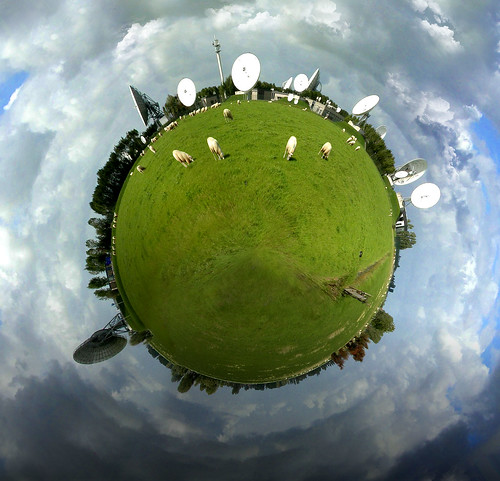
(photo credit: foxtongue)

Chosen because it nicely displays the misery of the job hunt. And it was either this or a bone pun.

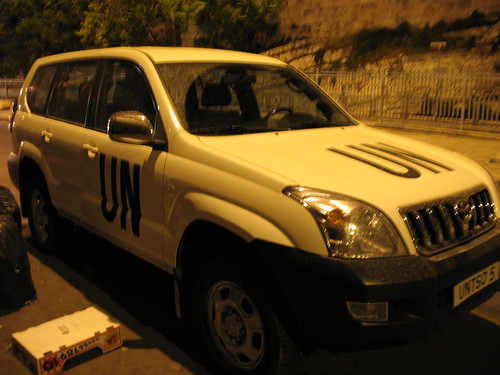
How to ride in a white SUV

1. Look sheepish, like you would never been in this huge vehicle if you weren’t forced into it by overprotective security officers.

2. Look ill. Maintain a greenish-grey visage that makes it clear that if you weren’t so terribly ill, you’d be on a local bus at this very moment.

3. Ride with someone older than you, and develop a facial expression that indicates you are just the gormless flunky riding involuntarily in the VIP car.

4. Fill your vehicle with boxes and bags, to make it clear that the SUV is hauling important equipment and you’re just along for the ride.

5. Wear your damn seatbelt. If you’re going to cruise around in a symbol of oblivious neo-imperialism you owe it to world to be safe.

————

(photo credit: hoyasmeg)

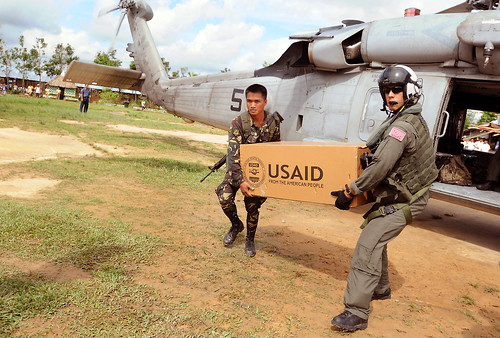
Humanitarian neutrality isn’t dead because it never existed

Humanitarian neutrality is dead. The sooner we stop mauling its rotting corpse, the better off we’ll all be. In fact, I don’t believe humanitarian neutrality ever existed. It’s not a corpse at all; it’s a figment of our imagination that we’re finally abandoned. The provision of humanitarian aid changes the dynamics of a conflict situation. It is therefore inherently not neutral, and it was naive to ever believe it could be.

Mary Anderson started talking about do no harm in 1994, and recognized that aid has an impact on the conflict, and is therefore never neutral. It was naive of us to ever pretend it was. Here’s what she had to say: “All aid programmes involve the transfer of resources (food, shelter, water, health care, training, etc.) into a resource-scarce environment. Where people are in conflict, these resources represent power and wealth and they become an element of the conflict.”

The targeting of NGO workers in places like Iraq, Afghanistan, and Somalia is appalling, and brutally dangerous. But what protected Medecins Sans Frontieres and the International Rescue Committee in Afghanistan in the 90s was not some airy-fairy belief in neutrality. It was the Taliban’s belief that the NGOs were not keeping the Taliban from achieving its goals. Combatants in Afghanistan no longer believe that, or are not organized enough to enforce rules. Mourning the end of neutrality is a dangerous sidetrack that keeps the real issue from being addressed.

All of that being said, I think that a particular NGO or project can nonetheless be known as honest and fair and therefore have a humanitarian space to operate in. But that’s not based on an abstract concept of neutrality or humanitarian space. It’s based on earning the trust and respect of local populations, and on convincing all sides of the conflict that your provision of aid will not turn the tables against them. That’s not an easy game to play, but it’s the only one we have. And, despite histrionics to the contrary, it’s the only game we’ve ever had.

——————————-

(photo credit: DVIDSHUB)

Chosen for pretty obvious reasons.

They’re looking right back

When I worked for IMC, we used to take our Iraq country director around to meetings in DC and NY whenever he was in the US. It wasn’t just for fundraising or to raise awareness about Iraq. People didn’t tend to believe that you could actually do relief and development work in Iraq, because of the danger and the complexity. We’d take our guy to them and he’d explain how you could do it. His meetings were a powerful tool, much more effective than a report could have been.

One question he fielded over and over was “Do your partners in Iraq know that you’re funded by the US government?”

His answer was always the same. “We have Google in Iraq, too.”

In our interconnected world, you can’t hide from the communities you work with. That’s a good thing. It’s much easier to treat people with respect when you know that they’re watching you. Transparency is part of accountability, whether or not that transparency is voluntary. I think that’s part of development 2.0. We’re not just going somewhere and learning the local situation so we can do our work; they are looking right back at us, and they’ve got the tools to disseminate their views.

On a related note: Development work is slow and frustrating. Community partners can drive you completely nuts. There are cultural barriers you can’t get past, easily-solved problems that never find resolution anyway. It’s easy to get bitter and angry. Whatever you do, don’t blog about it. How would the people in this guy’s town feel if they learned just how much he despises them?

___________________________

(photo credit: Onno B.)

Low Hanging Fruit

You know what I would love to do? I’d love to start an effort devoted entirely to solving the easy problems in the world. Not a new NGO; you know how I feel about that, but a division within a major existing group. It would be funded by donations, not government grants, and focus on the low-hanging fruit in relief and development. Heck, we could call it Low Hanging Fruit, and live with the inevitable LHF acronym. We wouldn’t worry about sustainability, but we’d have a big focus on local involvement.

There are a million little ideas we all run into, that don’t fit with any expressed donor priorities, but would so obviously make a useful different in the world. LHF would work on those. We’d document everything to pieces, so it would also serve as research on what works. Every community we worked in would have a paired control community with similar demographics, and as soon as we could demonstrate an intervention was working, we’d extend it into the control group so they could benefit too.

Because the focus would be on simple solutions, I think it would be easy (well, easier) to get the kind of individual donations we’d need to keep our programs going. A hippo roller or better irrigation is an easy sell, and easy to illustrate in photographs.

I’m not arguing that these kinds of quick fixes are the answer to the world’s problems; far from it. International development needs long-term approaches to major structural problems. But sometimes a band-aid help your wound heal faster, and it’s frustrating to see someone hurting when a five cent piece of plastic and gauze could make a difference.

Here’s some of what we’d do:

Irrigation: Irrigation water all over the world runs in open ditches. Water is then lost to evaporation and seepage into the ground. LHF would cement and enclose drainage ditches. We’d do it if farmers in the community agreed to provide a certain amount of labor. We would know if it was working by measuring water flows.

Water and Sanitation: We’d support distribution of the hippo roller, and the playpump. We’d know they were working if we saw a decrease in waterborne illness, or a decrease in the average reported time spent on fetching water.

Health: We’d teach parents how to make ORS at home, and work with communities to help them establish emergency transport funds for health emergencies and pregnancy, and nutrition education. We’d support new mobile phone applications to improve access to data for health care providers and remind patients on ARV and DOTS regimes to take their medicine.

ETA: Thinking about this some more, any large NGO could establish an internal “low-hanging fruit” fund. Country directors could submit projects to be supported from that pool of funds, based on opportunities they have seen that no major donor is interested in supporting. The fund pool could come from dedicated LHF fundraising or general unrestricted donor funds.

—————

(photo credit: sebastien.b)