Learning to be an expat, part 2

Exhibit A:
2002. I’m in Turkmenistan, my first job that requires ongoing negotiation with government officials. I am in the anteroom at the Ministry of Health, for my introductory meeting. I am very, very nervous. Natasha, our project manager and my translator for this meeting watches me fidget. She tells me, “I will translate what you say, and if I don’t understand something, I’ll just stop and ask you.” I calm down. She’s literally not going to let me say anything stupid.

Exhibit B:
Rural Turkmenistan, beginning a long gauntlet of meetings with doctors, hospital directors, and local health officials. They are good, friendly meetings that build our rapport and help our programs succeed, sometimes catch a small problem before it gets big, but they get tiring after a while. I sigh a little as I get out of the car. My colleague Zulfia hears me. “Alanna,” she says, “just keep smiling that American smile.”

Learning to be an expat, part one

airport

I’d only been at my job for about two weeks, and Artur and I were sent off to look at some field sites. We were in Ferghana City in Uzbekistan, waiting on the tarmac to board our plane. It was very very cold, and the flight crew was only boarding transit passengers from a Russia flight. We stood there, shivering and waiting. They boarded all the Russia passengers and then they waited some more, I guess just in case more transit passengers showed up. My bones were starting to ache with the cold, and still we were waiting.

And then Artur got sick of it. He shoved me in the back and told me, “You’re American. Just keep speaking English and get us on that plane.” So I did. I climbed the stairs as a woman yelled at me, and when she told me “transit only,” in Russian, I told her, loud and in English, that I had a ticket, I was tired of standing around in the cold, and I was going to get on the plane. I did this in my best haughty American voice, and when she argued in Russian, I just repeated myself louder in English. I spoke both Russian and Uzbek, but this was not the time for reasoned communication.

The woman cracked. She said something rude to me in Russian and let me by. I was followed by a joyous stampede of other passengers. When I got on the plane, there were lots of empty seats. Artur and I flew to Tashkent with an empty seat between us.

——————
Photo credit: yuriybrisk
That’s not the Ferghana airport, but it looked just like this.

Things I don’t believe in #3 – most kinds of evaluation (July 2008)

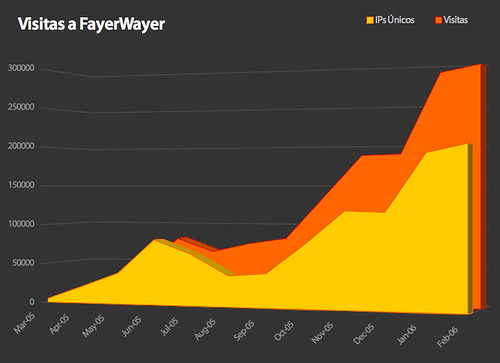
Indecipherable graph

Note: August is looking like a crazy and stressful month for me, with no time to blog here. To make sure no one gets bored and abandons me, I am going to re-run some of my favorite posts from the past.

Most forms of monitoring and evaluation annoy me. Instead of serving their true – and vital – functions, they are pro forma decorations created externally and staple-gunned onto a project once it’s already been designed. Usually a clean-looking table featuring a timeline and a list of indicators they plan to measure. I loathe those tables, for a lot of reasons.

Monitoring and Evaluation are not the same thing. The purpose of monitoring is to observe your program as you do it, and make sure you’re on the right track. The purpose of evaluation is to determine whether you are meeting your goals. These should not be confused.

Let’s use a hypothetical project. Say you’re trying to reduce infant mortality rates among young mothers in rural Bangladesh. That’s your goal. You need to start by defining your terms. What’s a mother? Just women with children, or pregnant women too? And exactly how old is young? So, decide you want to work with pregnant women and women with young children, and they must be under the age of 25. How do you want to keep these children alive? You decide to teach young mothers how to take care of sick children, and how to prepare nutritious food.

Your monitoring should make sure you’re reaching as many young mothers as possible. It should make sure that your educational efforts are well-done include accurate information. It should make sure you’re reaching young mothers, and not grandparents or childless women. Are you actually doing the stuff you said you would? Are you doing it well? That’s monitoring.

Evaluation is about whether you’re reaching your goal. You could be doing great education on children’s health and nutrition. Your young mothers could love your trainings, and lots and lots and lots of them could attend them. Your trainings could be amazing. But improving mothers’ knowledge may not actually decrease infant deaths. That’s what your evaluation will tell you – if your program actually achieving your goal.

What do these questions have to do with the neat little table on page 17 of your proposal? Very little. Monitoring, to be useful, needs to be constant. It can be based on very simple numbers. How many teachers/doctors/lawyers/mothers have you trained? Are the trainings still attracting participants? When your master trainers observe trainings, do they still like them?

Once you start getting answers to these questions, you need to use them. That’s why it’s better if managers collect monitoring data themselves. If participants don’t like your trainings, find out why, and fix it. If you’re not training enough people, maybe you’re not scheduling enough trainings, or maybe you’re not attracting enough participants. Monitoring is like biofeedback. Observe. Measure. Make your changes.

Evaluation happens less often. You’re not going to see impact in a month, maybe not in a year. Annually is usually often enough for evaluation, and you can get an outsider to do it. The important thing about evaluation is that your team needs to believe in it. If you get to the second year of your project, the project your team loves and you’ve given your blood and sweat to it, and the evaluation says it is not having any impact – your heart breaks into a million pieces. It is tempting and easy to simply decide the evaluation is wrong and keep wasting money on a project which just doesn’t work. You need a rock-solid evaluation you can trust so that if it tells you to change everything, you actually will.

(photo credit: leo.prie.to, chosen because I have no idea what it means)

Not everyone is a sociologist (July 2008)

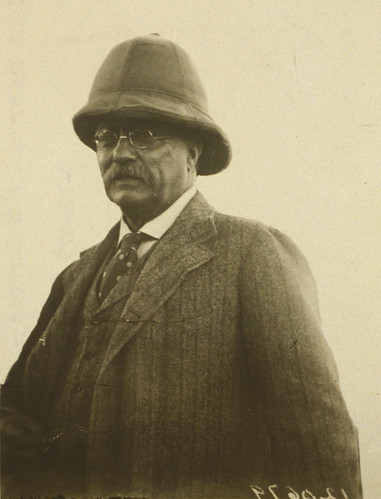
Teddy Roosevelt in a pith helmet

Note: August is looking like a crazy and stressful month for me, with no time to blog here. To make sure no one gets bored and abandons me, I am going to re-run some of my favorite posts from the past.

You can’t just choose any random person to be your cultural guide. It makes me completely crazy when people say “My Luisitanian colleague says our poster and brochures are fine” and then assume their messages are acceptable in Luisitania. One person cannot vouch for everyone in the country.

Most countries are multicultural, including different ethnic and linguistic groups. Not to mention differences between rich and poor, and city and country. It’s not easy to know the tastes and opinions of an entire nation. There’s also a training issue. Your average engineer or doctor from the capital city isn’t in the habit of thinking about the attitudes and mores of everyone around him. An accountant is not an anthropologist.

Most of us can only speak for a limited number of people like ourselves; coming from a developing country doesn’t give you any magic ability to speak for everyone who holds the same passport.

ETA: One great example. The Indian Vogue fashion spread discussed here was designed and shot by Indians.

——————–
Photo credit: sakraft1
Chosen because to me, pith helmets reflect everything that is culturally clueless. For all I know, teddy Roosevelt was a very culturally sensitive man…

Things I don’t believe in #10 – Donating stuff instead of money (June 2008)

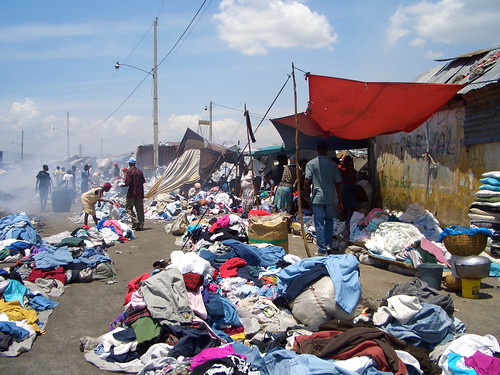
Pile of used clothes

Note: August is looking like a crazy and stressful month for me, with no time to blog here. To make sure no one gets bored and abandons me, I am going to re-run some of my favorite posts from the past.

Give money. Don’t send food, bottled water, clothing or useful-seeming stuff. Give money.

Your old stuff costs money to ship. It is almost always cheaper to just buy it in country, and doing it that way benefits the local economy. It’s also more respectful to survivors of humanitarian emergencies, and allows relief agencies to procure exactly what is needed instead of struggling to find a use for randomly selected used junk. Disaster News Network talks about the used clothes problem in “The Trouble with Trousers.” which features a really depressing anecdote about Hurricane Hugo.

Your food costs money to ship, too. It is probably not food anyone in the recipient area would recognize. How exactly will the people of Burma know what to do with canned refried beans or artichoke hearts? Sending donated American food doesn’t drive income to local farmers or help local retailers start selling again. Buying in-country gets food people will actually understand how to cook and supports the local economy.

Here’s another example – some people wanted to send their old tents to China to house earthquake survivors. A sweet idea – provide quick, free housing. But every different kind of tent would have different set-up instructions, and how many people save their tent instructions once they’ve learned how to do it? It would take a huge time investment in figuring out each type of tent, and then training for the people in China who had to set up the tents. All of this time translates to a delay in providing housing, and it’s time used by paid staff, which means it is also squandered money.

Interaction, the coalition of disaster-relief NGOs, has a nice piece about why cash donations are most effective. They mention needs-based procurement, efficient delivery, lower costs, economic support, and cultural and environmental appropriateness as advantages of cash. World Volunteer Web has a good explanation too, breaking down the myths about post-disaster aid.

Usually people end these kinds of articles with links to the three or so places who will take your old clothes and possessions for international donation. I am not going to do it. Don’t waste everyone’s effort that way. Give your old stuff to Goodwill, the Salvation Army, or St. Vincent de Paul; they’ll make the best use of it. They’ll sell your things locally and use the money for their charitable purposes.

Giving stuff instead of money is easy for you, it’s cheaper for you, and it’s quick. It is not quick, easy, or affordable for the NGOs who are actually trying to help people.

If you want to help, give money.

[Picture of old clothes in Haiti from Flickr by Vanessa Bertozzi]

Things I don’t believe in #6 – All powerful expatriate leadership (June 2008)

rainbow jesus


Note: August is looking like a crazy and stressful month for me, with no time to blog here. To make sure no one gets bored and abandons me, I am going to re-run some of my favorite posts from the past.


This is the first thing – expats don’t stay forever. In two or three or four years, the expat will leave. If your whole program depends on her, or the staff believes that it does, things will go to pieces when she leaves. This is the second thing – it’s disempowering. You don’t want your staff, or your stakeholders, to believe change only comes from outsiders. You want people to find their own power and their own capacity to influence their lives and communities. You don’t want them to sit around waiting and starving for the Dutch to come back and rebuild the irrigation canals.

This is the third thing. You want your staff invested in the process. You want everyone involved to know your select your pilot schools because they meet the qualifications for your program. You don’t want them thinking the schools were selected because Mr. Thomas feels really bad for the villages, or worse yet, because he thought the teachers were pretty. You want people to know you’ve got a system and your apply it fairly.

This is the fourth thing. Country Directors who allow themselves to be seen as having and exerting that kind of power end up isolated. Staff members won’t be comfortable being part of a collaborative decision-making process. They won’t offer opinions on how to make things better, and they won’t go to the CD if they identify a problem.

Good programs come from good teams, not from little gods and their adoring worshippers.

—————–
Photo credit: celinecelines
Chosen for the shiny rainbow.

May 2008 – What’s the difference between relief and development?

Palestinian Refugees

Note: August is looking like a crazy and stressful month for me, with no time to blog here. To make sure no one gets bored and abandons me, I am going to re-run some of my favorite posts from the past.

May 2008 – What’s the difference between relief and development?

The simplest breakdown goes like this:

Humanitarian relief programs are focused on rapid start-up, and rapid impact. Implementers of humanitarian programs need to gear up as fast as possible, and start providing necessary assistance as fast as possible. Their primary focus is not building local capacity, sustainability, or monitoring and evaluation. Their primary focus is getting help to people in need. They end when the emergency ends. Relief can come from the outside, and it is a response to some kind of breakdown or disaster.

Development programs are focused on achieving long-term change of some kind, with the intent of improving people’s lives and the lives of their descendants. They involve rigorous planning and ongoing operational research. They are rooted in local capacity building, because they are aimed at change which continues after the project ends. Even if it has outside support, development in the end has to come from inside.

In practice, however, it’s not that simple. (it never is, is it?) Sometimes the emergency doesn’t end. Situations that look like short-term humanitarian emergencies can go on for years, or even decades. Somalia, for example, Afghanistan, or Sudan. Programs designed to provide immediate assistance become a way of life for people in crisis. It would be nice if those programs could be converted into development programs, but it’s very hard to turn a relief program into a development program. The skill sets for the staff are different, for one thing. Building latrines and building community capacity can be a long, long way apart. You can hire new staff, though, or retrain your people. The other hurdle – usually the big one – is that relief programs and development programs have different donors.

Relief programs are generally funded by private donations and specific government donors. The US government, for example, funds emergency relief through the USAID Office of Foreign Disaster Relief. Development programs are far less popular with private donors, and they’re funded by a different set of government agencies. If you want to change the focus of your program, you have to get different different donors. Which mostly you can’t do. Donors don’t like to take over each other’s programs, you won’t be familiar with the new donor’s procedures and evaluation requirements, and development donors plan their financial priorities a long time in advance. They often won’t have money to pick up your newly transformed relief project.

Everyone’s perfect ideal for relief is to give aid that empowers the communities who receive it. Immediate assistance that also builds skills and improves quality of life for the long term. You could, for example, truck in water to a community struck by drought. Then you could dig wells and turn the wells over to local management. You could train a local engineering association or the Ministry of Water on well-digging and irrigation management and safe drinking water. We just need a funding structure that makes it happen.

———
Photo Credit: Castielli
Chosen because the Palestinian refugee camps are a classic example of emergency relief that has been going on far, far too long.