Leaving Haiti

The other day, the WHO asked aid groups in Haiti not to leave for at least 60 days. I found that kind of confusing, to be honest, because no aid agency is going to leave Haiti on purpose. Their humanitarian mission will make them want to stay – these groups do after all, want to help people. So will their competitiveness. Getting to open an office in a new country is exciting, and expands an NGO’s global reach.

NGOs will leave Haiti when they no longer have the funding to stay. They will do their best to stay – intense public fundraising appeals, unsolicited proposals to government donors, staff drawdowns, and salary cuts – but eventually there will be no money to remain in Haiti. Then, and only then, they’ll leave. (Except MSF. MSF leaves when the “emergency phase is over.” But as far as I know, only MSF does that.)

That means there is no point in appealing to the NGOs to stay. The WHO is aiming its pleas in the wrong direction. It’s not, in the end, the NGOs’ choice. We need to donate the money to keep them there, and push our governments to do the same. Whether or not the NGOs stay in Haiti is up to us.

********

Photo credit: Zedworks

Chosen because – that’s how you leave, right? On a jet plane?

Why don’t we do better?

Sam Brownback

I have mentioned two or three or thirty times that I am not the only person in the development world who obsesses about how we could do our work better. Everyone has ideas; it’s a very common topic of conversation among people who work in this field. Most of us have the same ideas. So why don’t we ever get to act on them? There are a few reasons I can think of:

Donors don’t always know what they are doing. Government donors are usually democratic nations, which means in practice that foreign aid programs are often defined by legislatures with no real background in international development. So you end up with earmarks for pet ideas, rules forbidding useful practices like harm reduction, and an overall lack of direction. Private donors tend to go for exciting quick impact ideas like mobile health clinics and cash-for-work projects. Overall, complicated, unsexy ideas like health system strengthening may go unsupported.

Donors are politically motivated. I have seen health projects where the donor chose the pilot areas because of mysterious HQ calculus about the possibility of terrorism or political instability. Or take a look at how funding goes to Gaza and the West Bank. Donors have reasons for supporting international development funding that go way beyond supporting international development, and it can be hard to take that money and make it useful. Many (maybe most) organizations tend to try anyway.

Lack of time. There is a steady supply of new research on what works in international development. There is no steady supply of time in which to read that research and figure out how to apply it in practice. Some places have a technical team at headquarters to keep up with new research and recommend how to use it. That’s not as common you would think, though, because that kind of work counts as an overhead expense. High overheads make it hard to get grants and donations.

Host country capacities. A good development program works with the host country government to build its skill set, so that impact will continue once the program is over. Sometimes that means obeying host country regulations that contradict best practices, or spending a year convincing a government to change its rules. For example, some countries in Sub-Saharan Africa were achingly slow to adopt community therapeutic feeding (plumpy’nut and other RUTFs) even when the data showed it was much more effective than older ways of treating malnutrition. It’s miserable being stuck in a project that could be doing far more than it is allowed to, but I think the alternative – setting up an aid system that is parallel to the government – or worse yet, contradictory – is worse in the long term.

Funding and evaluation cycles. It’s very hard to design a program that will have a long term impact and also start showing results in two years. It’s not impossible; I’ve worked for several projects that managed it. But it’s hard. It limits your options severely. And inexperienced or unskilled NGOs may just aim for quick results and worry about the long term later.

This is not an exhaustive list. It’s just off the top of my head. What am I missing?

************

Photo Credit: Iowa Politics.com

Chosen because Senator Brownback once tied up hundred of hours of manpower from an HIV/AIDS program because he didn’t understand the difference between harm reduction and risk reduction.

A story about donated shoes

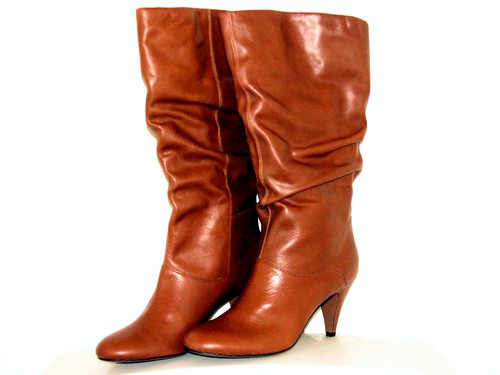
brown high heel boots
There is a woman who works for a friend of mine. I’ll call her Gulia since half the women in this country go by Gulia, so it’s safely anonymous. Every winter, all winter long, Gulia wears the same pair of battered brown ankle boots. They are too small for her, and they have no insulation. We know this because Gulia complains about her boots every day, all winter long. Her feet get cold, and her toes hurt.

My friend is a good person and a caring employer. She pays Gulia well enough that she could buy herself a pair of boots, but Gulia never does. She also gives Gulia boots.

She has given Gulia knee-high black boots to go with a dress. She has given her insulated fuzzy boots to fight the cold. She has given her cheery yellow rain boots to splash through the puddles that cover the roads here. Gulia does not wear these boots. When my friend asks about these boots, Gulia thanks her warmly for her generosity and insists that she wears the boots all the time, just not to work. We are quite sure that Gulia is lying about this.

Now, Gulia likes me. She is supporting her parents on her salary, and she likes that I am doing the same for my parents. She is ethnically Uzbek, and I speak Uzbek, so we can chat in her mother tongue. We get along. My friend asked me to try and find out what exactly was going on with the boots.

So, the other day I asked. And Gulia actually told me what was going on with the boots.

The answer? She’s short, and she’s a mom. Because she’s a mom, when she has cash she can spare, she doesn’t spend it on boots for herself. She spends it on her kids. Because she’s short, she only wears shoes with heels. And since my friend has been trying to give her practical, durable boots, she’s been buying flats. The ankle boots may hurt, but they have heels. Gulia can’t face life without the extra two inches. She’d rather have pinched toes and cold feet.

My friend’s gift boots are sitting at home in Gulia’s closet, waiting for Gulia to get so old she can’t wear heels any more, except for the fuzzy pair, which her mother now wears in cold weather.

The moral? There are several, I think. 1) Gulia wants other things, like school supplies for her kids, more than she wants new boots, so maybe we should stop giving her boots. 2) People want what they want, whether or not it makes sense to me. 3) And donated shoes need to actually meet people’s needs, as people themselves see them.

(This story is mostly true. I have changed some elements to make it totally anonymous.)

*******************
(photo credit: KayVee.Inc)
Chosen because I suspect those are Gulia’s dream boots.


Welcome metafilter visitors

Welcome Mat

Hello to everyone coming in from metafilter. For the record, I don’t consider myself to be an iconoclast. I am fairly certain that my ideas are 1) very ordinary and 2) shared by most people who work in international development. I’m just the person who’s willing to take the time to blog about it. And while I know I am critical, I do believe that international development can – and does – work. If I didn’t believe that, I wouldn’t be working in this field.

I know this blog isn’t all that searchable (I am working to fix that) so here are some links that might help you get a sense of what I am about:

Positive deviance, and why I like it

Why we should care about global health

Oral rehydration solution

The list of things I believe in

Learning from failure

Monitoring and evaluation

I am working a lot right now, so I don’t update that often. I have been blogging for a long time, though, so the archives run deep. (If you do go into the archives, you’ll notice I occasionally contradict myself. That’s because I’m still learning.) The best way to keep up with this blog is the RSS feed.

If you want fresh content, these are some international development blogs that say everything more eloquently than I do, use data more effectively, or both:

Tales from the Hood (currently blogging from Haiti)

Good Intentions Are Not Enough

Owen Barder’s Blog

***********
photo credit: Jason-Morrison