

Bill Easterly and the Culture of Nice

I was really excited to see that William Easterly has a blog now. And it’s not because I am a big fan of the man. I think many of his conclusions are just plain wrong, and he’s prone to ugly sweeping generalizations. He seems to assume from the get-go that other people are stupid and/or thoughtless. But he’s brilliant, and he’s not at all nice.

Development and aid work is mired in a culture of nice, and that culture keeps bad work from being eliminated and good work from getting better. We’re too nice to call a bad project a bad project. When we criticize, we criticize in abstractions. No one has any problem identifying bad products as bad – Vista, for example – but no one will ever call a bad program bad. If you look at my post on NGOs that do harm, you’ll only see anonymous comments about unnamed projects. We’re addicted to nice.

The charitable reason for this behavior is human decency. When good people are making a good faith effort to do work that matters, you feel like the worst kind of jerk calling them out for waste or incompetence. And every project benefits one or two people. Nobody wants to be the one to say that those one or two people were not worth the effort.

But there are a couple of people who like Vista, too. That doesn’t keep the rest of us from explaining exactly what’s wrong with it. After human decency, however, comes self-interest.

We change jobs a lot in this field. Project funding runs out, and you have to find your next gig, or your next donor. Most of us have worked for three or four different NGOs or companies, and perhaps a government agency. You don’t want to talk smack about a potential employer, and a potential employer could be just about anyone. And, of course, a potential employer doesn’t want an employee who criticized his last boss in public. So we all shut up, and organizations that everyone knows are sinkholes of mismanagement and despair just keep on getting grants and contracts.

I don’t really know how to fix this. I am not ready to tell you here on the world-wide-webs exactly which of my former employers sucked because I too would like to continue getting jobs. I started my “things I don’t believe in” series as one way to address the bad work no one wants to talk about, but I think it is still the kind of generality that doesn’t do enough good.

——————————
photo credit: devillibrarian
Chosen because both smiley faces and cookies effectively represent the culture of nice.
A story I’m not proud of

When I first started at IMC, I was senior desk officer for East Africa and the Middle East. I had a solid Middle East background, but I had to do a lot of reading on East Africa. I’d been there a few weeks and was starting to realize I’d somehow become an aid worker and I loved it.

I was reading an article about a young mother in Mogadishu. She had a baby and wouldn’t leave her house during the fighting (this was the 2006 fighting, FYI). Finally she ran out of all food and had to leave the house. She took her 3-month old baby with her. She was killed in the cross-fire and NGO workers found her baby frantically trying to nuzzle at his mother’s dead breast.

My son was three months old when I read that. I was a breast-feeding mother. I sat at my desk and cried, for quite a while. And then I thought, “If I had a picture of that, I could fundraise a million dollars, easy.”

Your work saves lives. You can’t do the work without money. It’s very, very hard to keep chasing the money you need to do good, and stay good yourself.

I don’t want to be Kevin Carter.

**********
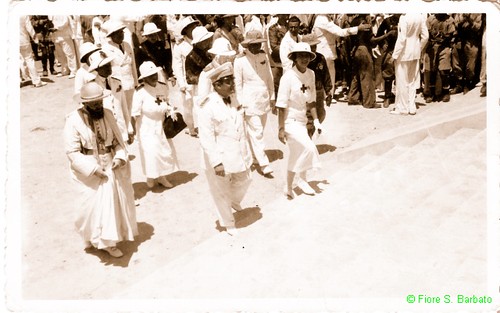
(image credit: Fiore S. Barbato)
Chosen because I am still too human to be able to search flickr for dead children

What makes a new NGO succeed?

1. Highly targeted mission. If you have the skill set to identify a very specific goal, you are likely to have the expertise to do your work well. And when I say very specific, I mean it. Something along the lines of “supply used lab equipment to labs around the world that request it” or “provide vaccines and health care providers to one small village.” In addition, a very specific goal gives you a solid fundraising angle. Community development for one small village is too general.

2. A cool name. I only wish I was kidding. But groups with cool names like Nothing but Nets (which has as a bonus an obvious sports tie-in) or a rhyming name like Unite for Sight – which sound catchy and immediately explain the organization’s goal – are far more likely to find support. It’s easier to raise funds, hire good staff, get grants, and find high-profile supporters when everyone can easily remember who you are and what you do.

3. And, of course, the song I always sing – a funding model which does not involve getting government or foundation grants. To repeat, it is very hard to get government funding. USAID and the other government donors usually identify a problem and then give grants or contracts to solve that problem. Big grants. Generally over $500,000. They don’t have the time to manage the kind of $30K grant you probably need for start-up. And foundations like to work with partners who have a long track record; they are rarely interested in funding the new guys. So, if you want to succeed, have a fundraising plan. (Here’s a hint – a cool name and a highly specific goal will help.)

Edited to add: I forgot the thing which actually started this post in my head. I have a new job – I am the global health blogger for Change.org. I am very excited about this. Change.org is full of amazing people with big social entrepreneurship ideas. We’re seeing huge numbers of people on the site every month. But I suspect that an awful lot of our success is due to the fact that the name Change.org is easy to understand and sticks in your head with the tenacity of a Britney Spears song.

(Writing for Change.org does mean that I will be posting here less often. I only have so many words in me, and I’m putting all my health content over there. I do plan to continue posting here at least twice a week, though, so please don’t drop my RSS feed just yet.)

***********************************
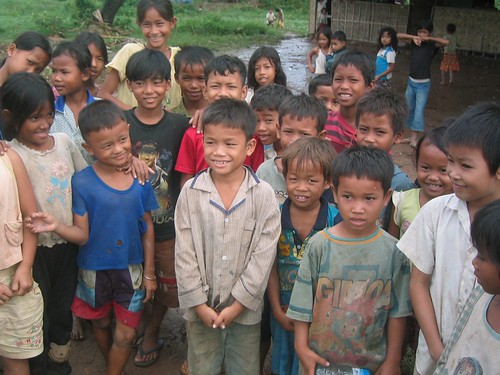
(photo credit: Cambodia4kids)
Chosen because they have a pretty good name and a specific goal of providing school uniforms to Cambodian kids.

Looking backward, looking forward


My favorite posts from 2008:

1) Why health matters. My best friends’ daughter died, and in the terrible misery that followed, I did my best to take a lesson from it. My grieving friends liked the post, and people are still linking to it, so maybe it’s a useful lesson. I hope I never have to write a post again informed by such personal pain.

2) Things I believe in: Oral Rehydration Salts. I love talking about ORS. I think everyone needs to know about them.

3) Development 2.0 – more than jargon? This post is still being tossed about on Twitter. Thinking about Development 2.0, writing the post, and talking to others about the contents helped me to finally get a grip on the concept. It was a really valuable process for me; I hope the result is valuable to others.

4) When do non-profits do more harm than good? A reader favorite, this post got amazing comments that enlightened me.

5) Things that do damage. My screed against thoughtlessness and poor planning.

6) Why I hate the word sustainability. Another post that helped me think things through, this generated a whole dialogue that I was proud to be part of.

7) Keep your banana to yourself. I love that I finally wrote something with a snappy title, and I think I said something important about the difference between street-corner charity and development work. Also, it got the best comment ever “Good grief. Such control! That’s like potty-training your kids at gun point.”

8 ) Suffering does not make you special. Apparently I like to rant. This time, about how poverty doesn’t ennoble the human spirit, it grinds it down.

9) Ethics and International Development. Just a few more ways that doing good is very hard.

10) Humbling Hospitality Experiences. You can always find a way to give, if you want to.

Bonus Post: A semi-definite guide to my volunteer work and my consulting. I felt like a total jerk writing that post, but based on the feedback it has helped a lot of people set boundaries in their own lives. (And it got me a consulting gig. I’m listing it here just in case it gets me more.)

And here is my thought for 2009:

We’re all in this together. We’re not in this line of work because we want to help far-away strangers. We’re in it because, in the end, we’re one big blob of people on one scarred messy planet, and no one is truly healthy when others are bleeding. We are connected; there’s no way around it. It’s time to make that connectedness a source of strength.

Happy New Year!

*********
(photo credit: NASA/Goddard Space Center, via woodleywonderworks)