
Text of a short talk I’ll be giving next week:
I want to tell you a story about crowdsourcing, social media, and how the world is changing.
A little while ago, we saw an outbreak of brutal ethnic violence in Southern Kyrgyzstan. Southern Kyrgyzstan is largely populated by ethnic Uzbeks, and they were being attacked – in really horrible ways – by ethnic Kyrgyz. They had been living together calmly for 20 years. It was an ugly shock.
I have spent a lot of time in both Southern Kyrgyzstan and Uzbekistan, and I was pretty upset about what was going on. I was reading about the situation obsessively, and talking to all my Uzbek and Kyrgyz friends about it. I learned that the violence was being driven by rumors. The first Kyrgyz attacks came in response to rumors of Uzbek atrocities, and rumors and distorted stories were still triggering violence.
So I thought, Kyrgyzstan needs Ushahidi, to cut through the rumors.
Ushahidi is an open source software platform that aggregates and maps crowd-sourced information. It receives information via SMS or the web, and then presents it in a user-friendly way that people can view on a computer or a cellphone. It was first used to map post-election violence in Kenya.
Five years ago if I’d thought that, there would have been nothing I could do. I could have told my friends, written a blog post, and worried. This year, I posted about it on Twitter. A couple people on Twitter gave me the contact information for the Ushahidi team. I wrote to them, and they told me that there was an Ushahidi Kyrgyzstan effort going on.
A guy called Altyn Ismailov was working on an Ushahidi platform for Kyrgyzstan. I got in touch with him by email. He told me that by now the violence had mostly stopped, but there was a constitutional referendum coming up in three days that threatened to trigger it all over again. Alytn wanted to have a referendum-specific Ushahidi platform running, to both monitor the voting and track any violence that occurred, but he had hit a wall.
Altyn was out of money, and he was exhausted. He asked if I would help him write a grant application to get funds to finish the Ushahidi platform and educate people about how to use it. I said yes, but I was worried about trying to get DfiD or USAID to mobilize funds in four days. Then Altyn told me he needed 564 dollars.
Now I don’t have a life where I can just write a check for $564, but I do have a bunch of Twitter followers. I told Altyn I thought I could fundraise the money for him, and leave major donors out of it. I put up a ChipIn widget with a project description, and described the effort to my Twitter followers. My goal was to raise $564 in 48 hours.
We raised $610 in 8 hours. It was amazing. Altyn got his money, and the platform was up in time for the referendum. The voting went smoothly, and there was no further violence. Odds are it would have gone smoothly anyway, but we were proud to be part of the insurance.
This isn’t a story about me or Altyn, though. This is a story about change. Ushahidi is an open source platform, developed in the global south. Ten years ago, Africa didn’t have the connectivity to develop and distribute a platform like Ushahidi. And ten years ago, cell phones didn’t have the power or the ubiquity to make Ushahidi a useful tool.
I learned about Ushahidi from the web. I got the contact information for its team via social media. I was in touch with Altyn by email. I raised the money using the ChipIn widget to let people track and donate, and all my fundraising requests were on Twitter. Nothing about the fundraising effort would have been possible without social media and new technology.
This was a small scale effort, and there were a lot of reasons that it got lucky.* But I have a feeling it’s going to be the model for a whole lot of bigger efforts in the future.
*Specifically, Ushahidi is a social media darling, the amount of money needed was small and specific, and Kyrgyzstan was in the news.
———–
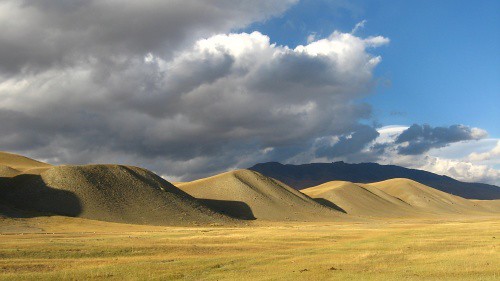
(Photo credit: Robert Thomson)
Chosen because this is a gorgeous picture of Kyrgyzstan and looks just like I think of it.